

Bookkeeping Extended DefinitionBookkeeping is an essential part of your accounting process. Record all your business’s transactions and separate them into categories. Cash accounting is suitable for small businesses due to its simplicity, but it comes with some limitations such as its potential to misrepresent a company’s financial status.
Accounts Receivable
Accounting standards are formal guidelines ensuring consistency, transparency, and legal compliance in financial reporting, fostering trust among stakeholders and aiding informed decisions. By maintaining accurate records and adhering to regulations, Accounting ensures compliance with legal standards and avoids potential penalties. A subset of managerial Accounting focuses on calculating and managing costs related to products ledger account and services to optimise profitability. The task of bookkeeping is performed by a bookkeeper, who keeps track of all the financial data and organizes them systematically. The term “transaction” refers to the business activity, in which the exchange of money or money’s worth for goods or services is involved.
- Tax imposed to back up the regular income tax imposed on CORPORATION and individuals to assure that taxpayers with economically measured income exceeding certain thresholds pay at least some income tax.
- A DEBT that falls due more than one year in the future or beyond the normal OPERATING CYCLE, or that is to be paid out of noncurrent assets.
- If expenses are incurred in December 2024 but paid in January 2025, the company can’t claim a deduction for 2024, possibly affecting its bottom line.
- If he has properly maintained the accounts, he will not face the problems in explaining few things in court.
- Technology has automated many routine tasks, enabled real-time financial reporting, improved accuracy, and allowed accountants to focus on analysis and strategic advisory services.
- Additional differences include fines and interest on unpaid taxes, which aren’t deductible for tax purposes.
- The regulatory bodies have stated some basic principles to standardize the process.
Regression Analysis
In the other example, the utility expense would have been recorded in August (the period when the invoice was paid). Even though the charges relate to services incurred in July, the cash method of financial accounting requires expenses to be recorded when they are paid, not when they occur. Usually issued on a monthly, quarterly, or annual basis, the income statement lists the revenue, expenses, and net income of a company for a given period. Financial accounting guidance dictates how a company recognizes revenue, records expenses, and classifies types of expenses. GAAP refers to standard accounting principles, concepts, and guidelines for preparing and presenting financial statements.

Non Routine Transactions

MUNICIPAL BOND term referring to the debt of government entities within the jurisdiction of larger government entities and for which the larger entity has partial CREDIT responsibility. ASSETS having a physical existence, such as cash, land, buildings, machinery, or claims on property, investments or goods in process. Generally, the basis of property acquired by INHERITENCE, BEQUEST or device from a DECENDANT is the FAIR MARKET VALUE of the property on the date of the decendant’s death. Thus if the fair market value is more than the decedent’s basis, a taxpayers basis in the property received is stepped-up. MARKET for buying and selling COMMODITIES or financial instruments for immediate delivery and payment based on the settlement conventions of the particular market. Number of shares of stock provided for in the articles of INCORPORATION of a COMPANY.
- Declining balance methods charge more depreciation expense in early asset years than other methods, based on the theory that businesses use more of the asset initially.
- Therefore, cash accounting can both overstate or understate the condition of the business if collections or payments happen to be particularly high or low in one period versus another.
- This unique trust arrangement is specifically provided for in the INTERNAL REVENUE CODE.
- Standard rate multiplied by a level of activity to determine the OVERHEAD cost of that activity.
- Analysts, managers, business owners, and accountants use this information to determine what their products should cost.
The accountant is responsible for complex bookkeeping definition tasks like calculating depreciation schedules and determining inventory valuation methods. They also ensure compliance with Generally Accepted Accounting Principles (GAAP). The analysis informs management’s forward-looking decisions on capital investment and operational strategy. The Trial Balance lists the ending balance of every General Ledger account to verify that total debits equal total credits. This step confirms the mathematical accuracy of the double-entry system.

Capitalized Cost
Recording and reporting of financial transactions, including the origination of the transaction, its recognition, processing, and summarization in the FINANCIAL STATEMENTS. Furthermore, tax planning and preparation fall squarely within the domain of the accountant. While the bookkeeper provides the raw data, the accountant transforms that data into actionable reports. The distinction between bookkeeping and accounting lies primarily in their scope and focus. Bookkeeping is tactical and retrospective, concerned with the mechanical recording of historical financial events. The bookkeeper focuses on the accuracy of the record-keeping process.
Doctrine that interference https://www.bookstime.com/ of government in business and economic affairs should be minimal. Writing checks against a bank account with insufficient funds to cover them, hoping that the bank will receive deposits before the checks arrive for clearance. An overall operating philosophy of INVENTORY management in which all resources, including materials, personnel, and facilities, are used only as needed. When two or more persons or organizations gather CAPITAL to provide a product or service.
What Is Cash Accounting?
Equity is the net assets of a business – or in other words – Assets minus Liabilities equals Equity. All financial transactions input to the bookkeeping system are called entries. The bit ofpaper that accompanies the cash or cheques and which details what bank accountthe funds should be paid into, the amount of the deposit and the date of thedeposit. When money(cash or checks|cheques) is paid into a bank account it is called a deposit. The place wherefinancial entries of a similar nature are recorded, for example the ‘Sales’ account is where business income goes, the ‘Stationery’ account is where all pens, paper, staplers etc go. On the flip side, accountants use invoicing software to help you get paid.
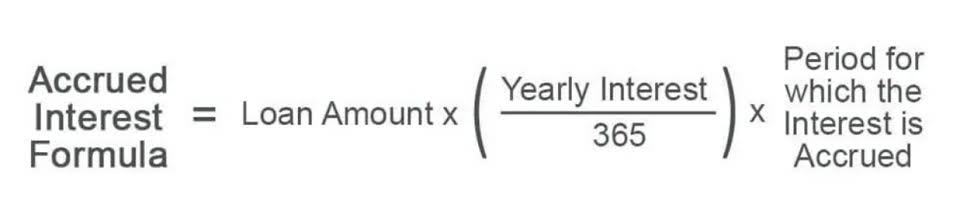
The payback method is simplest but least comprehensive, while net present value and internal rate of return provide more sophisticated analysis considering the time value of money. These assets are not recorded in formal accounts but are listed in financial statement notes. Assets are part of a business if economic benefits and risks of ownership accrue to that business.